Polish National Ballet

OUR STORY


Ballets started being performed at the Polish royal court in the first half of the 17th century. The court theatre of King Ladislaus IV (1633-1648) presented ballet scenes in Italian opera productions. For many years, though, practically only foreign dancers performed in Warsaw. Famous European ballet-masters worked for the Polish court: Louis de Poitiers, Charles Duparc, Jean Favier, Antoine Pitrot, Antonio Sacco and Francesco Caselli. The greatest dancers of the time performed on the Warsaw stage: Louis Dupré (1724-1726), Charles Le Picque with Anna Binetti (1765-1767), Gaetano Vestris (1767) and many others. In 1766, even the great Jean-Georges Noverre applied for the position of ballet-master in Warsaw, though unsuccessfully. He dedicated and sent his famous reformatory work "Théorie et pratique de la danse" to King Stanislaus Augustus. The work has survived to this day, and is housed in the Warsaw University Library's Picture Collection.


The first Polish soloist and ballet-master of this period was Maciej Prenczyński, who not only danced in Warsaw and at the court theatres of Polish magnates, but also performed at Venice's famous Teatro San Benedetto (1773/74) and in Vienna (1775/76).


In 1785 King Stanislaus Augustus became the patron of a group of 30 home-grown dancers, who had trained earlier in Lithuania at the estate of Count Antoni Tyzenhauz. This first professional Polish ballet company, known as His Majesty's National Dancers, formed the beginnings of Polish ballet. It was run by François Gabriel Le Doux from Paris and Daniel Curz from Venice - the fathers of Polish national ballet. The ballet company of the Teatr Wielki - Polish National Opera is heir to this tradition.


In the Romantic period, the Warsaw ballet was regarded as one of Europe's leading ensembles, rivalling the Ballet of the Parisian Opera, and the St Petersburg ballet. The ballet company was headed, among others, by two outstanding French ballet-masters, Louis Thierry (1818-1823) and Maurice Pion (1824-1843), and its repertoire included the most famous European works as well as original ballets by Polish choreographers to the music of Polish composers. Poland hosted great Italian choreographer Carlo Blasis (1856), and the legendary Filippo Taglioni was the director of the Warsaw ballet company from 1843-1853.


The choreographer and teacher Roman Turczynowicz was an outstanding Polish ballet-master of the Romantic period. In the late 1840s and in the 1850s, he fulfilled a role similar to that played by August Bournonville in Copenhagen. Unfortunately, Poland's stormy history destroyed the achievements of national choreography of that time, and after Turczynowicz, barely a memory survived in the pages of the history of ballet. The National Ballet School in Warsaw is named after him.


In later years, the company's ballet-masters included Hipolit Meunier, Virgilius Calori, Pasquale Borri, José Mendez, Raffaele Grassi, Enrico Cecchetti, Piotr Zajlich, and Jan Ciepliński. Many famous foreign dancers performed on the stage of the Teatr Wielki, including Maria Taglioni, Carlota Grisi, Virginia Zucchi, Mathilda Kschessinska, Pierina Legnani, Cecilia Cerri, Olga Preobrayenska, Vera Trefilova, Anna Pavlova, Tamara Karsavina, and Isadora Duncan.


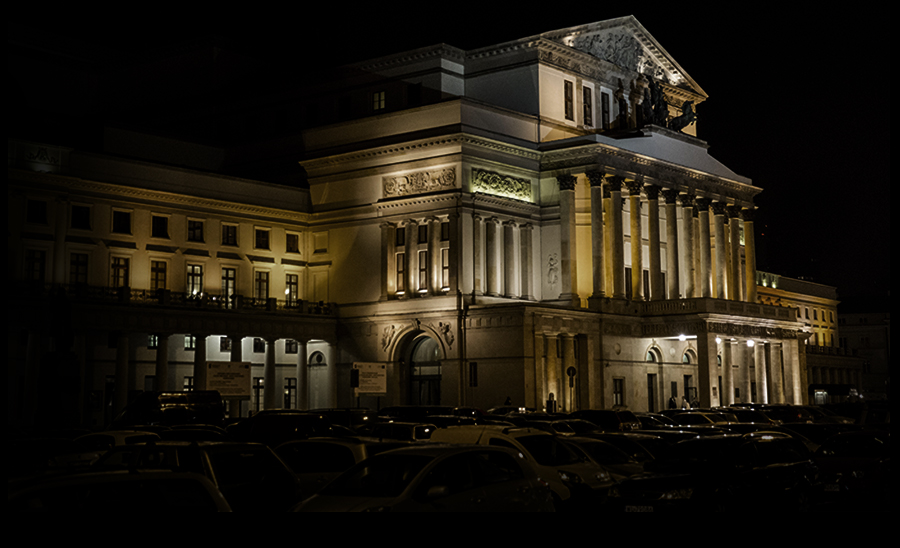
During the first 48 years of its existence, the Warsaw ballet worked in the National Theatre building at Krasińskich Square, together with opera and drama groups. In 1833, a new theatre building was erected in the centre of Warsaw, known today as the Teatr Wielki - Polish National Opera, which continues to be the residence of the Warsaw ballet. During the war and the years of occupation (1939-1945), the ensemble suspended its activities and the theatre building was completely destroyed. Afterwards, the ballet and opera used substitute theatre halls. It was only after the reconstruction of the Teatr Wielki was completed in 1965 that both groups gained one of the biggest and most modern theatres in Europe as their residence.


A new Ballet School was set up in Warsaw (1950), modelled on the Russian school of classical dance. Leon Wójcikowski (Woizikovsky), a former soloist of Sergei Diaghilev's Ballets Russes, played a significant role in the development of the Warsaw School. Many of Polish dancers were trained by this outstanding teacher.


After the wartime break, the Warsaw ballet had to begin almost from scratch. The renewed creation and shaping of the ballet company was to take many years, and its managers included Leon Wójcikowski, Stanisław Miszczyk, Raissa Kusnetsova and Maria Krzyszkowska. The company has presented such classics as: "La Fille mal gardée" (Frederick Ashton's version), "La Sylphide" (Bournonville/Ralov), "Giselle" (Coralli, Perrot/Petipa), "La Gitana" (Filippo Taglioni/Lacotte), "Grand pas de quatre" (Perrot/Alicia Alonso), "Swan Lake" (Petipa, Ivanov/Sergeyev), "The Sleeping Beauty" (Petipa/Grigorovich), "Les Sylphides" (Fokine) and "The Graduation Ball" (Lichine). It has presented contemporary works of choreographers such as: Françoise Adret, George Balanchine, Maurice Béjart, John Butler, Birgit Cullberg, Mats Ek, Antal Fodor, Joseph Lazzini, Serge Lifar, Hans van Manen, Alberto Méndez, Asaf Messerer, John Neumeier, André Prokovsky, Alfred Rodrigues, Alexei Tchitchinadze, Oleg Vinogradov, Erich Walter and Yuriko. Lorca Massine worked here for several years, adding his popular production "Zorba the Greek" to the theatre's repertoire.


Productions prepared by Polish choreographers have also been staged regularly, including works by Leon Wójcikowski, Stanisław Miszczyk, Jerzy Gogół, Eugeniusz Papliński, Witold Gruca, Witold Borkowski, Jerzy Makarowski, Teresa Kujawa, Zofia Rudnicka, Andrzej Glegolski, Emil Wesołowski, Waldemar Wołk-Karaczewski, Marek Różycki, and Krzysztof Pastor.


The Warsaw ballet has always attracted the best Polish artists. After the war, many brilliant Polish dancers performed on the Warsaw stage, including Barbara Bittnerówna, Witold Gruca, Witold Borkowski, Olga Sawicka, Maria Krzyszkowska, Stanisław Szymański, Wojciech Wiesiołłowski (Woytek Lowsky), Feliks Malinowski, Zbigniew Strzałkowski, Elżbieta Jaroń, Bożena Kociołkowska, Janusz Smoliński, Wacław Gaworczyk, Gerard Wilk, Andrzej Ziemski, Helena Strzelbicka, Renata Smukała, Ewa Głowacka, Barbara Rajska, Anna Białecka, Dariusz Blajer, Waldemar Wołk-Karaczewski, Ireneusz Wiśniewski, Łukasz Gruziel, Anna Grabka, Janusz Mazoń, Andrzej M. Stasiewicz, right up to Elżbieta Kwiatkowska and Sławomir Woźniak. Some of them had a successful international career, as soloists of Béjart's 20th Century Ballet and other well-known European ballet companies.


Famous world ballet dancers have appeared on the Warsaw stage, including Natalia Bessmertnova, Natalia Dudinskaya, Eva Evdokimova, Margot Fonteyn, Carla Fracci, Marcia Haydée, Doris Laine, Maya Plisetskaya, Ludmila Semenyaka, Raissa Struchkova, Paolo Bortoluzzi, John Neumeier, Konstantin Sergeyev, Michael Somes, as well as Anne Adair, Johanna Björnson, Laura Connor, Wendy Ellis, Gigi Hyatt, Ann Jenner, Lubov Kunakova, Ana Laguna, Lilla Pártay, Nadezhda Pavlova, Malika Sabirova, Anna Seidl, Eglé Spokaité, Marion Tait, Miyako Yoshida, Paul Chalmer, Marat Daukaev, Imre Dózsa, Wayne Eagling, Clint Farha, Vyacheslav Gordeyev, Maximiliano Guerra, Stephen Jefferies, Nicholas Johnson, Irek Mukhamedov, Christian Musil, Anders Nordström, Roland Price, Faruh Rusimatov, Konstantin Saklinsky, Reda Sheta, Yuri Vasutchenko, Arne Villumsen and other foreign dancers.


The Teatr Wielki - Polish National Opera Ballet has been on many tours, visiting most European countries, as well as the United States and Canada, Argentina and Brazil, Israel and Taiwan.


In March 2009, the world-renowned Polish choreographer Krzysztof Pastor was appointed director of the ballet company at the Teatr Wielki. Under his management, the Polish National Opera's ballet received the artistic autonomy which had been demanded for a long time. On 29 April 2009, upon a motion from General Director of the Teatr Wielki – National Opera Waldemar Dąbrowski, Minister of Culture Bogdan Zdrojewski turned the ballet company into a separate entity in the theatre's structure and elevated it to the status of the Polish National Ballet, an equal partner of the Polish National Opera at the Teatr Wielki.


Paweł Chynowski