Polish National Ballet

”Dance Europe”:

And the Rain will Pass...

Maggie Foyer considers a major new creation in Poland.  


   With this new ballet Krzysztof Pastor has given his homeland a precious gift: an epic ballet indelibly stamped with a Polish identity. Henryk Górecki, a composer who writes in the vernacular of Poland, was Pastor's obvious choice and the music for the three sections has, as well, a spiritual resonance, neatly balancing the universal with the national. Situated between the ideological power blocks of fascism and communism, Poland has endured more than its fair share of tragedy. Pastor marks the recent modern history in ways that are subtle yet unmistakeable and never didactic.  
   And the Rain will Pass is a huge work using almost all of the company's 85 dancers, orchestra, choir and soloists and featuring guest dancer Rubi Pronk from Dutch National, His character, identified as 'the spirit', is cast in the manner of a seer, predicting the coming times of fear and misfortune. Simply dressed in white trousers, he stands apart, quietly dominating the scene while his exceptional fluidity and beautiful lines are well exploited in Pastor's choreography. But this is predominantly a work to display the company's talents. The concepts are woven into the choreography and no opportunity for dance is wasted in the challenging ensemble work and solo dances, which call for both expression and technique. Pastor draws on the dancers' strong classical training and extends it with his own contemporary blend of tensile bodies and expansive arms. The company grows in strength with each season, and at the premiere looked very impressive indeed.  
   The story is that of the common people, 'we of today', and it is this group who open and close the work, and from them Pastor creates flesh-and-blood characters in intimate episodes poignantly isolated amid the turmoil of war. The work opens with Beatus Vir for full orchestra, the dancers flanked by chorus singers. Pronk is joined by Adam Kozal and Egor Menshikov, two sinister, black-clad figures. His fluent dance style is picked up in their duet, moving to the close contact trio, which challenges and disrupts the harmony. Set against a backdrop of ominously building clouds, the chorus of wraith-like figures, clad in shrouds of wispy grey, breaks rank and launches into fluid duets where the swelling movements reflect the growing agitation. Dominika Krysztoforska, a dancer of exquisite length and a line to match, was outstanding, as was Maksim Woitiul in his powerful solo in the following movement, where fear grips the community, schisms appear and tension rises.  
   Ana Kipshidze and Sergey Popov gave a sensitive portrayal of love that crosses the divide, her desperation tellingly displayed as she thumps her bowed head against his chest. This duet comes as a prelude to the riveting pairing of Aleksandra Liashenko and Paweł Koncewoj. The stylised death camp selection has marked them for extermination. The extreme simplicity of their flesh-coloured costumes is mirrored in the sparse notes of Górecki's Little Requiem for a Polka, and all adds to the despair of individuals trapped in the nightmare of genocide. There are no histrionics to accompany her inevitable death as the projection of flames, a reminder of the destruction of the Warsaw Ghetto, focuses down onto one sheet which the guards wrap round her body to make a burning shroud. It becomes a searing glimpse into one of the darkest times in human history. Jacek Tyski's fiery solo added another dimension: his impotent rage against the inhumanity. 
   For those outside, the contrasting violent outbursts in Górecki's music are taken up in frenzied dance. But death eventually reaches all and a garish yellow light pours down on the victims strewn across the stage, now just bundles of war detritus. Then the rain comes. In Krzysztof Baczyński's words, "Rain is like compassion - it wipes everything away". The focus moves to Pronk dancing in a rain of light. Droplets of water run down his body and are whipped into arcs of spray, giving the movements an electrifying afterlife.[...]   
   The work runs an hour and a half without interval. There is a slight loss of momentum in the early part of the second movement, but as the people and stories emerge from the flow of history it finds its rhythm and drives inexorably onward, making any break unthinkable. Yumiko Takeshima's costumes are dancer friendly and effective, uniforms that hint at authority and street clothes just out of the ordinary. On this enormous stage Bert Dalhuysen has surpassed himself, creating some of his most imaginative lighting effects, sculpting the dance and rising to meet the epic challenges. This is a work of major importance: a fusion of dance, music and drama that marks a coming of age for the company.

Maggie Foyer [”Dance Europe”, No. 151 / 2011]


"Leipziger Volkszeitung":
  

Aufbruch beim Ballett in Warschau

Der neue Chef Krzystof Pastor stellt sich mit „Tristan“ vor


   Der Jubel ist einhellig für die jüngste Ballettpremiere im Warschauer Teatr Wielki mit seinen 2000 Plätzen. Vor ausverkauftem Haus präsentiert der neue Ballettdirektor seine Choreografie „Tristan“ mit Musik von Richard Wagner, folgt in der Handlung des zweiaktigen Werkes aber eher Motiven des Romans „Tristan et Iseult“ des französischen Autors Joseph Bédier von 1900.

   Krzystof Pastor ist als Choreograf um die Welt gereist. Nach der Ausbildung in Polen und ersten Engagements hier, wird er Solist in Lyon. Er macht mit eigenen Arbeiten auf sich aufmerksam, choreografiert beim renommierten Het Nationale Ballet Amsterdam, unter der Leitung Hans van Manens, dessen Nachfolger er wird. Amsterdam wird er von Warschau aus verbunden bleiben, ebenso dem Moskauer Bolschoi-Ballett, dem israelischen Ballett in Tel Aviv und dem Königlichen Ballett Schwedens in Stockholm. Hier entstand auch seine Tristan-Version, die in einer Reihe steht von bislang über 20 Choreografien unterschiedlichster Art von Choreografen wie Léonide Massine und Frederick Asthon, Tatjana Gsowsky und Maurice Béjart, John Cranco, Glen Tetley und John Neumeier, die Hans-Werner Henzes Musik für ein Tristan Ballet folgen. Susanne Linke schuf eine spezielle Version für das Nederlands Dans Theatre, bei der sie den Titel in Fragezeichen einschloss: „?Tristan und Isolde?“.

   Für Pastors „Tristan“, 2006 in Stockholm uraufgeführt, bearbeitete Henk de Vlieger Musik aus Wagners Bühnenwerk. Immer wieder fügt er Motive des ersten Vorspiels, des nächtlichen Liebesduetts, der traurigen Hirtenweise des dritten Aufzugs und in verschiedenen Varianten den Sehnsuchtsgestus des Liebestodes in einer Orchesterversion zueinander. Besondere Markierungen erfahren die Stationen der Handlung durch die Einfügung der fünf Lieder auf Gedichte von Mathilde Wesendonk, die der Tristanthematik und Melodik nahe sind. Das Ballett, inspiriert von den nachtfarbenen Klangbildern Wagners, wird so zu einer Traumhandlung mit Sequenzen aus dem Leben und Sterben des Ritters Tristan. Von Isolde, die den Verwundeten heilt, vom Verwechslungsverhängnis eines Liebestrankes, das zwei Menschen schuldlos schuldig in den Tod treibt. Nacht und Tag, und Welt und Traum durchdringen einander. Tristans Eltern, Blanchefleur und Riwalen, sind anwesend als weiße Engel, Elemente der Natur erhalten tänzerische Gestalt wie höfische Gestalten, Ritter und Kaufleute. Für Wagnerianer sicher nicht akzeptierbar, für die Warschauer Ballettfans schon. Einzelne Buhrufe für den Dirigenten Tadeusz Kozłowski sind Reaktionen auf dessen wenig inspirierte Wiedergabe der Musik als einziges Manko des Abends.

   Das Warschauer Corps de ballet präsentiert sich bei enormen Anforderungen seitens der Choreografie sehr gut disponiert für den individuellen neoklassischen Stil des neuen Chefs. Da ist die frappierende Virtuosität der Sprünge und Drehungen ebenso gefragt wie die elegante Linienführung oder die archaische Reduktion der Bewegung. Krzystof Pastor hat das Gespür für die riesigen Maße der Warschauer Bühne, zum Gesang der ausgezeichneten Sopranistin Agnieszka Rehlis fügt er die assoziativen Bewegungen der Tänzer, zum Spiel des Orchesters den Gesang bewegter Körper. Höhepunkte des Abends sind zweifellos die Duette für Tristan und Isolde, beredt und immer wieder verblüffend in den Varianten des Unglücks, das narrative Geschick des Choreografen, weit entfernt von den Stereotypen der Ballettpantomime. Euphorisch bejubelt wird das abschließende Duett zum Liebestod, inzwischen auch ein Galastück für Stars wie Svetlana Zakharova und Andrej Merkuriev. In Warschau versetzten der schwedische Uraufführungs-Tristan Jan-Erik Wikström und die polnische Primaballerina Izabela Milewska das Publikum in pure Begeisterung.

   Die Chance gilt es zu nutzen. Der neue Ballettdirektor hat große Pläne, von derzeit ca. 40 Vorstellungen will er die des Balletts auf 80 erhöhen. Mit Angeboten und Workshops will er in die Stadt hineinwirken, junges Publikum ansprechen und gewinnen. Für die nächste Saison kündigt er einen Kurt-Weill-Abend an, der ebenso wie die für 2010 vorgesehene Choreografie „In Light and Shadow“ zu Musik Johann Sebastian Bachs für Warschau eine Novität sein dürfte. Das nächste Handlungsballett ist auch schon geplant, von 2011 ist die Rede, und auch davon, dass es Tanz zu Musik von Chopin geben wird.


Boris Michael Gruhl

["Leipziger Volkszeitung", 2 April 2009 und Tanznetz.de - Das Tanzportal im Internet]


Dance Europe:
 

Tristan

Maggie Foyer savours Krzysztof Pastor's while hot take on Wagner in Warsaw


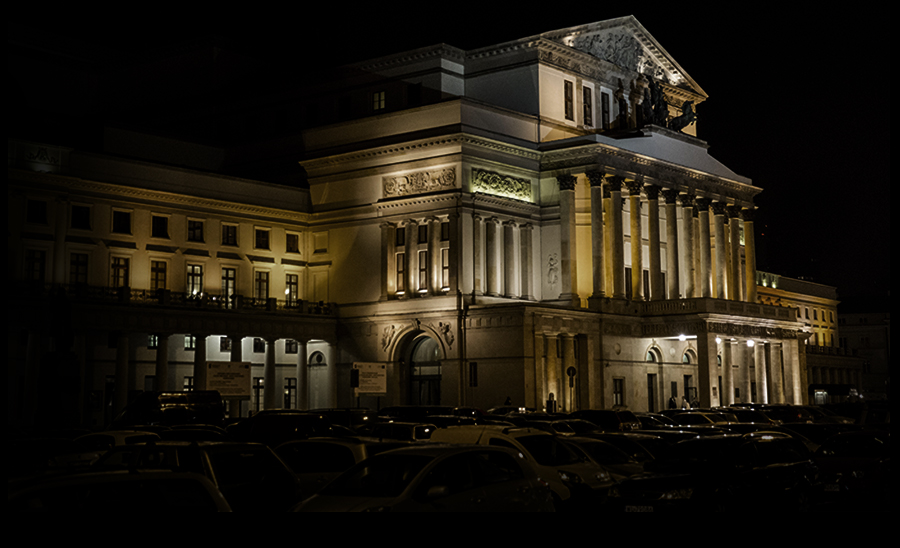
   With its the theme of death-defying love, Wagner's intoxicating musie and the largest stage in Europe - the premiere of “Tristan” at Warsaw's Teatr Wielki was a grand occasion. This production by Krzysztof Pastor, the first in his new role as director of the Polish National Ballet, is a reworking of the ballet pre-miered in Stockholm in 2005. For his scenario, Pastor, with dramaturg Carel Alphenaar, returned to the roots of the legend. The story knows no half measures, plunging the depths and scaling the heights where love is absolute and death is preferable to dishonour. And like an emotion junkie, Wagner's music goads the passion to the extremes. While there have been many major ballets on the Tristan theme, most choreographers have used other music. Pastor, however, has chosen the concert version of “Tristan and Isolde”, and included some of the “Wesendonk Lieder”, beautifully sung by Agnieszka Rehlis. These songs, based on poems of Mathilde Wesendonk, Wagner's forbidden love, introduce a different, and welcome, sensuality.

   Fortunately Pastor has the cast to run this emotional gamut. As Isolde, Izabela Milewska's tiny frame was alive with passion; her beautifully placed legs and feet enhanced by sensual arms. Jan-Erik Wikström, guesting from the Royal Swedish Ballet, was her Tristan. Technically he was on peak form, giving himself totally to the character in a compelling performance. In an evening rich with pas de deux, particularly moving was the duet following the moment they mistakenly drink the love potion; the inevitable outpouring of passion is blissfully expressed in a torrent of voluptuous dance. In the opening of the second act, Wikström faithfully captures the desolation of Tristan. He is consoled by his 'guard-ian angel' parents, sensitively performed by Dominika Krysztoforska and Siergiej Basłajew, both fine dancers whose constant presence enhanced the performance. This sad and lovely trio successfully draws the audience back to the narrative. This is no easy story to convey in dance, but in moments like lsolde's trial by fire, Pastor's choreography vividly portrays the drama of the scene.

   Pastor's choreographic language is grounded in classicism but has the flexibility to interpret the drama in the various characters. Wojciech Ślęzak, as King Mark, has the stature for this kindly royal, but unrelenting nobility of purpose can be extremely wearing and it was a relief to have some bad blood in the form of Karol Urbański as the Irish warrior, Morholt, and the three scheming barons, Pavel Koncewoj, Michał Tużnik and Jacek Tyski, spiking the drama with malicious intent and powerful dance. Likewise Osilde, the 'other woman', seductively danced by Marta Fielder, who does her best to distract Tristan. This is a large company, nearly 100 strong. The corps were well rehearsed, looking particularly good in the partnering where they worked with musical precision, good finish to the movements and the bonus of dramatic intensity.

   The new scenery by Katarzyna Nesteruk makes simple, strong statements that add clarity, although the costumes by Maciej Zień were rather too fairylike for this rough and tumble world of white hot passions. With Tristan, Pastor has shown he is not one to shirk a challenge and, on the evidence of this successful start, the company can look forward to exciting times ahead.


Maggie Foyer


[Dance Europe, No. 129,  May 2009]


„The Warsaw Voice”:


Showcase for Young Choreographers


   The Wielki Theater - National Opera is closing the season with four ballet evenings entitled Creations that showcase the talents of young choreographers.
   Director Mariusz Treliński and choreographer Krzysztof Pastor, two big names in contemporary Polish theater, have been working hard to encourage young talent, as well as coming up with their own productions for the Wielki Theater.
   The Creations ballet nights will highlight the work of Warsaw-based choreographers Natalia Maria Wojciechowska, Robert Bondar, Edward Bablidze, Jacek Tyski and Karol Urbański.
   Pastor, the new director of the Polish National Ballet, came up with the idea of choreography workshops at the Wielki Theater. He wants to give young dancers a chance to make their debut as choreographers. Similar workshops are held regularly by Het Nationale Ballet troupe in Amsterdam, where Pastor is resident choreographer.


[„The Warsaw Voice”, 21 June, 2009] 


„Danas / Kultura”:

Od Vagnera do Brodveja

Muzika Kurta Vajla u interpretaciji Krištofa Pastora opčinila publiku u Varšavi

   Hladni novembarski vikend u Varšavi obeležila je jedna baletska premijera. Kurt Vajl je ponovo opčinio i zaintrigirao svojom muzikom, a savremeni okvir i novo čitanje vremena i okolnosti u kojima je kompozitor živeo, pronašao je koreograf i novi direktor Nacionalnog baleta poljske prestonice, Krištof Pastor.
Oblepljeni po čitavom gradu, posteri ukazuju na veoma moderan, čak smeo plesni događaj, ali se takođe i kompletna sezona opere i baleta predstavlja publici veoma atraktivno, intenzivno i drugačije od svega što se na varšavskim ulicama može videti, uključujući čak i usvojene inostrane reklame. Uostalom, Teatar Veliki zauzima centralnu poziciju između starog grada koji je u potpunosti odoleo svim naletima globalizacije i novog centra prepunog poznatih tržnih i ugostiteljskih brendova. Na tom raskršću, možda je simbolično određena i njegova uloga.
   Krištof Pastor je već etabliran koreograf čije se ime nekako najviše vezuje za Holandski nacionalni balet. U svoju rodnu Poljsku, stigao je nakon igračke karijere u baletima u Lionu i Amsterdamu, gde se sretao sa rukopisima velikih koreografa poput Balanšina, Josa, Kranka, Aštona, Van Manena, Kilijana ili Duata. Sva ta iskustva prepoznaju se u onome što Pastor danas radi, jer se njegov rečnik može definisati kao zahtevna savremena klasika, primerena kvalitetnoj nacionalnoj trupi. Njegov angažman direktora varšavskog baleta počeo je u martu ove godine. Nasledio je odlične igrače i repertoar u koji želi da ulaže. Pa, ipak njegova kompanija ima dobre programske temelje, Krankovog „Onjegina“, Aštonovu „Pepeljugu“, nekoliko Balanšinovih postavki koje je prenela Patrišija Niri, zatim „Bajaderku“ Natalije Makarove, što već jasno govori o kvalitetu trupe, jer je ove licence teško dobiti i još zahtevnije održavati.
   Impresioniran ličnošću i umetničkom zaostavštinom Kurta Vajla, odnosno svemu onome što je stalo u samo pedeset godina života nemačkog kompozitora, Pastor je ovu predstavu prvi put postavio 2001 godine za Holandski nacionalni balet. Povratkom na isti naslov, uneo je izmene i shodno pristiglim tehničkim mogućnostima, dozvolio gledaocu da na sceni uvek može da izabere svoj ugao posmatranja. Za one tradicionalnije, pogled se zaustavlja na sjajnim igračima, u velikom delu odgovornim za uspeh ove predstave. Pa ipak, maestralna režija glavnog filma na ogromnom video bimu, odlično izabrane fotografije i inserti na manjim platnima za projekcije jesu fantastična scenografija, koja u samom startu „kupuje“ novu publiku. Na sceni je povremeno, ali veoma dobro upotrebljen hor sa solistima opere, tako da u potpunosti čine deo slike, uvek opravdano uvedeni ili toliko dobro osvetljeni da bi oživeli prizore starog, crno belog filma ili detalje sa fotografija. S igračima je koreograf radio po principu brisanja baletskih titula i klasične podele, kako bi stvorio ansambl podjednako interesantnih i tehnički savršenih protagonista. Taj zapadni pristup u ovom, ipak neoklasičnom ostvarenju, još jedan je kvalitet predstave. Muzika je osnov za hronološko ređanje slika, poput protrčavanja kroz jedan zanimljiv, reklo bi se hrabar život. U nekom prohujalom vremenu velikih istorijskih promena, koja su uslovljavala mala ljudska pomeranja, i nije čudno koliko se muzika Kurta Vajla menjala, koliko se prilagođavala, koliko je žurila da se obrati svima. Ovom predstavom obuhvaćeni su najrazličitiji muzički inserti istog kompozitora, od „vagnerovski“ ozbiljnih operskih arija, orkestarske, horske, i kamerne muzike, do običnih, opšte popularnih pesama, šansona, i brodvejskog mjuzikla. U tom smislu je i koreograf kreirao filmski, osvrćući se na jedno vreme, bez ikakve podele uloga. U tome je njegov pristup zanimljiv i (potpuno) neočekivan u slučaju kada sam naslov ukazuje na prelistavanje istorije i biografskih podataka. Iako bi mogla da bude još efektnija sa malim kraćenjima, ili možda pakovanjem u jednu celinu bez pauze, ova predstava ima svoje mesto i razlog. Njen kvalitet čine izuzetni igrači, koji sa lakoćom ispunjavaju sve dinamične koreografske zadatke, interaktivna upotreba filma i fotografije, kao i odličan dizajn svetla. Napuštajući teatar, kroz velike hodnike, razmišljam koliko su predrasude čudna kategorija. Dolazeći u Poljsku, nisam imala osećaj da ću se susresti sa izuzetno relevantnom kompanijom iz evropske plesne porodice. Ili sam želela da verujem da se beogradski balet još može takmičiti.

Aja Jung

[„Danas / Kultura”, Serbia: 7 Decembar 2009]